
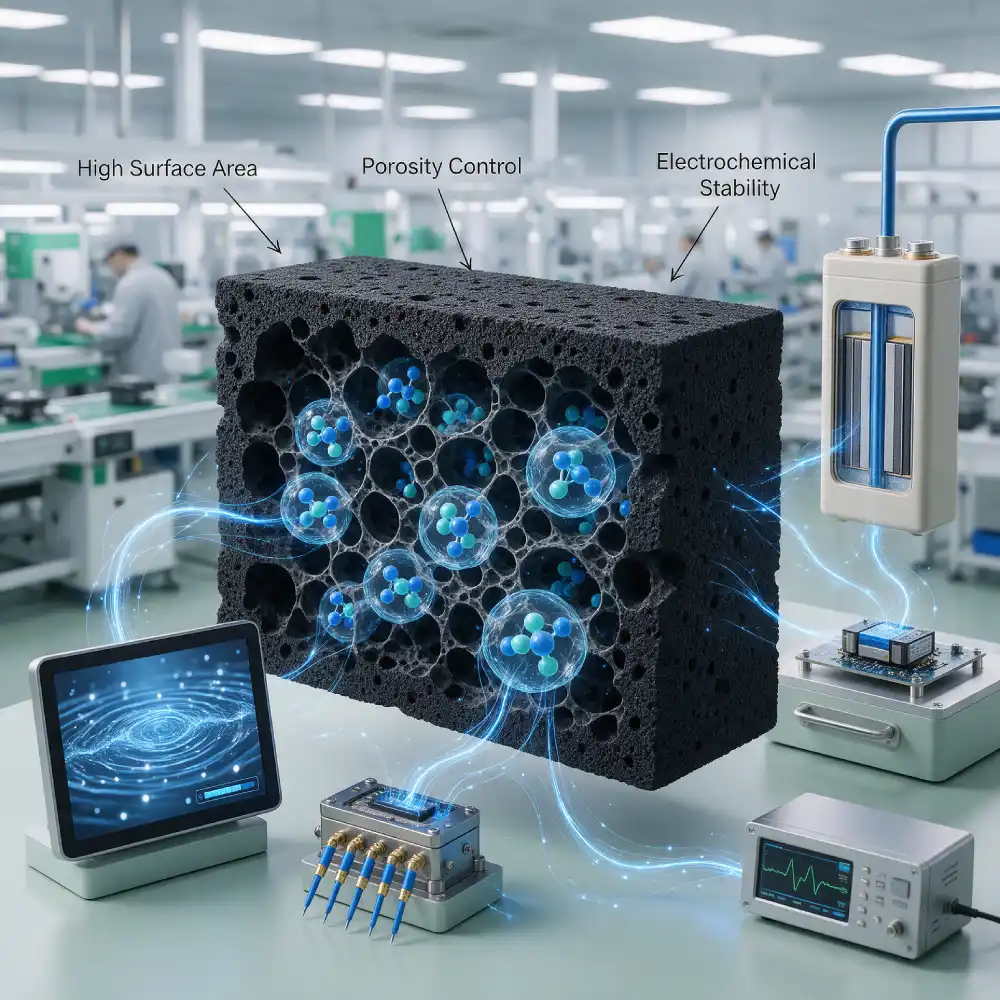
Activated carbon for electronics applications may support solvent recovery, vapor control, process-air treatment, water polishing, and selected contamination-control duties. These environments often require careful attention to purity, extractables, dust, particle consistency, packaging, and lot documentation. The correct grade depends on the exact process stream and the effect that trace contaminants could have on equipment or product quality.
Start with the process stream
Define whether the carbon will contact air, gas, water, or a solvent-containing stream. Record the target compounds, concentration range, flow rate, temperature, humidity or pH, operating pressure, and allowable outlet level. Note any materials that can compete for adsorption capacity or react with the media.
Electronics facilities should also identify contamination limits. A carbon used upstream of a sensitive process may need tighter controls than a general industrial odor-control application. The supplier cannot evaluate suitability accurately without knowing the process conditions and acceptance criteria.
Purity and extractables
General activity values do not describe every impurity that may matter in electronics manufacturing. Buyers may need to review ash, moisture, water-soluble extractables, particle size, dust, and relevant elemental or ionic limits. The required tests should reflect the intended contact stream and downstream sensitivity.
If a specification calls for particular analytical methods, state them in the request for quotation. Results from different methods may not be directly comparable. Where risk is high, qualify a representative sample and confirm the documentation required for future lots.
Particle strength and dust control
Granular carbon is exposed to filling, vibration, transport, flow, and replacement handling. Hardness and abrasion resistance help reduce breakdown, but system design and handling practices also affect dust generation. Screens, retainers, filters, and loading procedures should be appropriate for the selected particle size.
Dust control is not only a housekeeping issue. Fine carbon can migrate into downstream equipment or interfere with sensitive processes. Packaging should protect the media from contamination and moisture during transport and storage.
Adsorption performance and service life
Capacity for the actual target compound is more meaningful than relying on a single general index. Humidity, temperature, competing vapors, and concentration influence adsorption behavior. For solvent recovery or vapor treatment, evaluate breakthrough behavior and any regeneration requirements as part of the total operating cost.
Pilot testing should use representative process conditions and clearly defined acceptance limits. Track inlet and outlet concentrations, pressure drop, media loss, operating time, and any effect on downstream quality.
Qualification, change control, and documentation
Electronics procurement often involves technical review across operations, quality, engineering, and environmental health and safety teams. Define the required technical data sheet, safety data, certificate information, lot traceability, packaging, shelf-life guidance, and change-notification expectations before approval.
When comparing Philippine activated carbon suppliers, review not only the nominal specification but also communication, sample support, lead time, and the ability to maintain documentation across repeat orders.
CocoCARB supply options
CocoCARB provides Philippine-origin coconut-shell activated carbon and product information for industrial qualification. Start with the electronics application page, compare available CocoCARB grades, and review CocoCARB’s Philippine supply approach.
Request an electronics-application quotation
Include the process stream, target compounds, operating conditions, purity requirements, particle size, annual and order quantity, packaging, delivery location, and required certificates. Contact Richson’s Trading to discuss a representative sample and technical documentation.