
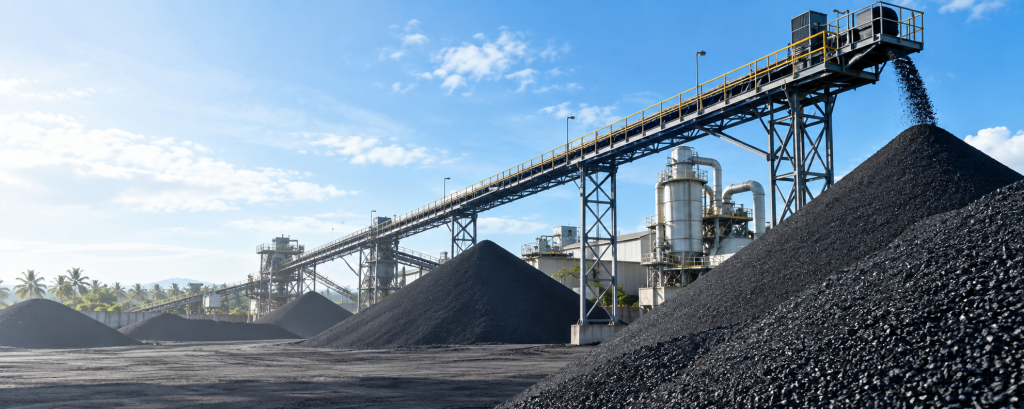
CIP and CIL activated carbon in the Philippines serves the same fundamental purpose: adsorbing dissolved gold-cyanide complexes so the precious metal can be concentrated and recovered. The two processes differ in where leaching and adsorption occur, which changes how carbon is exposed, moved, screened, and managed. Understanding those differences helps operators choose and qualify an appropriate carbon grade.
Carbon-in-pulp: adsorption after leaching
In a carbon-in-pulp circuit, ore is leached before the slurry enters the adsorption tanks. Granular activated carbon is mixed with the pulp and generally advances counter-current to the slurry. Interstage screens retain the carbon while allowing the finer slurry to move through the circuit.
CIP performance depends on effective mixing, suitable carbon concentration, adequate residence time, healthy screens, controlled carbon advance, and consistent regeneration. Carbon must load gold efficiently while resisting abrasion from long periods of agitation and repeated transfer.
Carbon-in-leach: leaching and adsorption together
In a carbon-in-leach circuit, cyanide leaching and carbon adsorption occur in the same tank train. Carbon is present while gold continues to dissolve. This arrangement can help capture dissolved gold promptly, but it also exposes carbon to slurry, reagents, organic matter, competing species, and mechanical handling throughout the combined process.
CIL activated carbon should be evaluated for kinetics, equilibrium loading, hardness, size distribution, screen retention, acid washing, elution, and regeneration. The effect of preg-robbing minerals, oils, flotation reagents, and other foulants should also be considered where relevant.
Where CIC fits
Carbon-in-column systems commonly treat clarified or low-solids pregnant solutions in fixed or fluidized columns. CIC can be used with heap-leach solutions and selected recovery streams. Pressure drop, flow distribution, contact time, solution clarity, carbon packing, and column staging become important design considerations.
Why coconut-shell carbon is widely evaluated
Coconut shell is naturally dense. When carbonized and steam activated, it can produce a hard granular adsorbent with a developed microporous structure. This combination supports adsorption while helping granules withstand movement through tanks, pumps, screens, elution equipment, and regeneration systems.
Raw-material origin alone does not guarantee plant performance. Manufacturing consistency, activation conditions, final sizing, washing, packaging, storage, and operating practice all matter. This is why a product should be reviewed through specifications, samples, and representative trials.
Five factors that influence carbon selection
1. Adsorption activity
CTC activity and iodine number help describe pore development, while gold-loading tests provide more application-specific evidence. Faster kinetics may be useful where residence time is limited, but plant conditions remain decisive.
2. Hardness
High hardness helps reduce attrition and fines. Fines can pass through screens, complicate housekeeping, and contribute to gold losses. Laboratory hardness should be considered together with plant carbon-loss accounting.
3. Mesh size
Particle size affects screening, transfer, hydraulic behavior, and adsorption rate. CocoCARB’s listed gold-recovery products use 6 x 12 mesh. Other requirements should be confirmed before ordering.
4. Regeneration response
Carbon may lose activity through fouling or incomplete regeneration. Acid washing, kiln temperature, residence time, atmosphere, quenching, and handling all influence regenerated-carbon quality.
5. Consistency and supply
Stable specifications and dependable delivery help plants control inventory and avoid repeated process adjustments. Buyers should align forecasts, pack size, delivery schedule, and quality documentation with their operating plan.
How to run a meaningful CIP or CIL trial
Establish baseline data before introducing a new carbon. Record recovery, barren solution, carbon loading, carbon concentration, advance rate, make-up addition, fines, screen condition, elution results, and regenerated-carbon activity. Agree on trial duration and acceptance criteria, then avoid unrelated process changes that would confuse the comparison.
Samples should be representative, identified by lot, stored correctly, and tested using agreed methods. Plant data should be reviewed over enough time to account for carbon movement through adsorption, elution, and regeneration.
What to send with a quotation request
Provide the CIP, CIL, or CIC configuration; current carbon specification; mesh size; consumption; trial quantity; normal order quantity; 25 kg or 550 kg packaging preference; delivery destination; target schedule; and required documents. Mention any recurring issue such as slow loading, high attrition, screen losses, fouling, or variable regenerated activity.
Explore CocoCARB’s CTC 50, CTC 55, and CTC 60 grades or discuss your gold-recovery process with Richson’s Trading.